

I have spent long days and nights researching this sector and I am happy to say that I can bring you my top picks for the best CFD trading platforms in the UK, which offer the widest range of markets, at the best possible prices, with the highest standards of security and protection.
UK CFD trading has increased sharply in popularity over the last decade, especially among advanced traders who have the experience to trade strategically and avoid some of the pitfalls of trading CFDs.
Also consider: Discover UK trading platforms
Browse the best CFD trading platforms for October 2026
See my top CFD trading platforms for UK investors and traders below where I highlight each broker for their products, fees, pros and cons.
Top CFD trading platforms at a glance

IG is a highly trusted investment platform that is both regulated by the Financial Conduct Authority and listed on the London Stock Exchange. IG is one of the largest Forex and CFD brokers in the world, with an excellent range of education materials and free CFD trading courses on the IG Academy to help you develop your understanding of the financial markets.
With IG, traders can choose to trade on over 18,000 financial markets with IG’s own platform, or alternatively MetaTrader 4 or ProRealTime, making this platform the best overall CFD stock broker in the UK.
IG were the 2020 winner for Best CFD Provider at the Online Personal Wealth Awards.
What I like about trading CFDs on IG
IG provide CFD traders with negative balance protection as well as the ability to open a position for a fraction of the cost with their competitive margin rates. Custom price alerts allow traders to react immediately to changes on either the web-based platform or from the mobile trading app.
Pros
- Free withdrawals and deposits
- Extensive range of financial markets
- Excellent customer support
- Traders can choose from three platforms
Cons
- High stock CFD fees
- High minimum first deposit
IG Fees
| Shares: | EU and UK Shares 0.10% US Shares 2 cents |
| Forex: | 0.6 minimum spread |
| Indices: | 0.1 minimum spread |
| Commodities: | 0.3 minimum spread |
| Inactivity fee: | £12 per month after 2 years of inactivity |
| ProRealTime Charts: | £30 a month |
| Currency conversion: | 0.5% |
Assets available from IG
- Forex
- Indices
- Shares
- Commodities
- Other financial markets including options, interest rates, bonds, sectors and more
Spread bets and CFDs are complex instruments and come with a high risk of losing money rapidly due to leverage. 69% of retail investor accounts lose money when trading spread bets and CFDs with this provider. You should consider whether you understand how spread bets and CFDs work, and whether you can afford to take the high risk of losing your money.

Capital.com is a CFD and spread betting platform that has been running since 2016, and Capital Com (UK) Ltd is authorised by the FCA (FRN 793714). The platform gives you more than 5,500 instruments, including over 4,000 share CFDs, 120+ forex pairs, indices, commodities, ETFs, bonds and interest rates. Crypto is not available to UK retail clients.
The minimum deposit is £20, which makes Capital.com one of the cheapest platforms on this list to open, and there are no deposit, withdrawal or inactivity fees.
What I like about trading CFDs on Capital.com
Trading is commission-free, so the spread is the only trading charge, and EUR/USD starts from 0.6. The Investmate app, courses and webinars cover the basics, and I found the Investmate lessons a good place to start if CFDs are new to you. You can trade on the Capital.com web platform and app, MetaTrader 4 or TradingView, and the proprietary platform carries over 100 technical indicators. The free demo account has no expiry.
Algorithmic trading is possible through Expert Advisors on MT4. Copy trading isn’t available on Capital.com’s own platform, but you can copy trade through third-party tools via TradingView and MetaTrader 4.
Pros
- Commission-free trading with no deposit, withdrawal or inactivity fees
- £20 minimum deposit
- Investmate app, courses and webinars
- Choice of MT4, TradingView and the Capital.com platform
Cons
- No copy trading on Capital.com’s own platform
- Crypto not available to UK retail clients
Capital.com Fees
| Commission | None |
| Forex: | EUR/USD from 0.6 |
| Minimum deposit: | £20 |
| Deposit and withdrawal fees: | None |
| Inactivity fee: | None |
| Overnight funding: | Charged on leveraged positions |
Assets available from Capital.com
- Shares (4,000+ share CFDs)
- Forex (120+ pairs)
- Indices
- Commodities
- ETFs
- Bonds and interest rates
Spread bets and CFDs are complex instruments and come with a high risk of losing money rapidly due to leverage. 65% of retail investor accounts lose money when trading spread bets and CFDs with this provider. You should consider whether you understand how spread bets and CFDs work, and whether you can afford to take the high risk of losing your money.
Spreadex has offered spread betting and CFDs from St Albans since 1999, and Spreadex Ltd is FCA authorised (FRN 190941). Its list of more than 10,000 markets covers UK and US shares, global indices, hundreds of FX pairs (spot and futures), commodities, bonds and interest rates, ETFs, IPOs and options. The UK small-cap and AIM coverage is the deepest I have found among the CFD brokers here.
There is no minimum deposit, and card deposits start from £5.
What I like about trading CFDs on Spreadex
Spreadex charges no commission on any market. Indices start from 0.6 points, EUR/USD from 0.6 pips in peak hours and the FTSE 100 from 1 point. The web platform and the iOS and Android apps integrate TradingView charting, with Autochartist alongside for pattern recognition. Options are dealt mainly over the phone, with a small number available online and no daily options.
Two limits to know about: MetaTrader 4 and 5 are not offered, and there is no standalone demo account. Practice trading runs through TradingView paper trading linked to a Spreadex account. Education is limited compared with rivals.
Pros
- No commission on any market
- No minimum deposit
- UK small-cap and AIM share coverage
- TradingView charting and Autochartist
Cons
- No MetaTrader 4 or 5
- No standalone demo account
- Limited education
Spreadex Fees
| Commission | None |
| Forex: | EUR/USD from 0.6 pips in peak hours |
| Indices: | From 0.6 points |
| FTSE 100 | From 1 point |
| Minimum deposit: | None (card deposits from £5) |
Assets available from Spreadex
- UK and US shares, including AIM and small caps
- Indices
- Forex (spot and futures)
- Commodities
- Bonds and interest rates
- ETFs
- IPOs
- Options
Spread bets and CFDs are complex instruments and come with a high risk of losing money rapidly due to leverage. 61% of retail investors lose money when trading spread bets and CFDs with this provider. You should consider whether you understand how spread bets and CFDs work and whether you can afford to take the high risk of losing your money.

Pepperstonewas founded in Melbourne in 2010, and its UK arm, Pepperstone Ltd, is FCA authorised (FRN 684312). It offers spread betting and CFDs on more than 1,200 instruments, including 60+ currency pairs, indices, commodities, shares and ETFs, with no minimum deposit and no inactivity or account fees.
What I like about trading CFDs on Pepperstone
Pricing is the reason Pepperstone is here. The Razor account has raw spreads from 0.0 with commission of about £2.25 ($3.50) per side per lot, and its EUR/USD spread averages 0.17 pips, the lowest I have encountered from a forex broker. The Standard account is commission-free with EUR/USD from 0.6 pips. Both suit scalpers and short-term traders who care about every tenth of a pip.
You can choose between MetaTrader 4, MetaTrader 5, cTrader, TradingView and Pepperstone’s own web platform and app. Copy trading runs through third-party services (Signal Start, DupliTrade and MetaTrader Signals), and ForexBrokers.com rated Pepperstone best in class for copy trading for the ninth year in 2026.
Support is 24/5 and the Trustpilot score is 4.7. The one thing I would change is the demo account, which lasts 30 days.
Pros
- Razor spreads from 0.0 with EUR/USD averaging 0.17 pips
- No minimum deposit, inactivity fee or account fee
- MT4, MT5, cTrader and TradingView
- 24/5 support with a 4.7 Trustpilot score
Cons
- Demo account expires after 30 days
- Copy trading only through third-party platforms
Pepperstone Fees
| Standard account: | EUR/USD from 0.6 pips, no commission |
| Razor account: | Spreads from 0.0, commission about £2.25 ($3.50) per side per lot |
| Minimum deposit: | None |
| Inactivity fee: | None |
| Account fee: | None |
Assets available from Pepperstone
- Forex (60+ pairs)
- Indices
- Commodities
- Shares
- ETFs
Spread bets and CFDs are complex instruments and come with a high risk of losing money rapidly due to leverage. 72.9% of retail investor accounts lose money when trading spread bets and CFDs with this provider. You should consider whether you understand how spread bets and CFDs work, and whether you can afford to take the high risk of losing your money.

Admirals have a great selection of CFDs including 19 cash indices, 25 index futures, 28 commodities and over 3400 individual stocks. This is all across a number of global stock exchanges that include the New York Stock Exchange (NYSE), the London Stock Exchange (LSE) and the Tokyo Stock Exchange (TSE).
What I like about trading on Admirals
In addition to their very competitive pricing, Admirals offer a lot of tools to help manage volatility including:
- Limit maximum price slippage on stop and market orders
- Cancellation of pending orders on price gaps
- Cancellation of stop orders with trigger prices exceeding predefined maximum slippage
- Market execution of limit orders
- Activation of stop orders using reversed quotes
- Partial execution of limit orders
Fees: Commission-free trading with spreads that average at around 0.6 pips on the EUR/USD
Minimum balance: $100
Products available: Trade MT5, Ivest MT5, Zero MT5, Bets MT5, Trade MT4, Zero MT4
CFDs are complex instruments and come with a high risk of losing money rapidly due to leverage. 76% of retail investor accounts lose money when trading CFDs with this provider. You should consider whether you understand how CFDs work and whether you can afford to take the high risk of losing your money.

Plus500 launched its unique internal data analytical tool ‘+Insights’ in 2022. This is a powerhouse that produces up-to-date analysis on millions of trades from other users, allowing you to get a handle on market trends, trader sentiment and identifying the highest-yielding trades. This could be considered even more valuable than copy trading, as it allows traders to harness the wisdom of crowds.
On the negative side of the coin, there is no MetaTrader platform available here so loyalists will be disappointed. In addition, education is minimal and there is an inactivity fee should your account lie dormant.
What I like about trading CFDs on Plus 500
There are over 2800 CFDs to choose from at Plus500 which should be sufficient for any appetite. This includes over 25 commodity CFDs, 90 ETF CFDs, indices (country and sector) CFDs, over 100 options CFDs, and worldwide shares CFDs.
I am also impressed with the proprietary trading platform which is well-suited to active traders looking for competitive pricing and multilingual (16) 24/7 support through WhatsApp, chat, and email.
Pros
- no commissions, spreads and other fees apply
- Tight spreads
- Guaranteed stop-loss orders
- Low minimum deposit
- No deposit or withdrawal fees
- Massive range to assets and financial markets available
Cons
- Inactivity fees
- Education
Plus500 Fees
| Inactivity fee: | $10 per month after 3 months of inactivity |
| Withdrawal fee: | $0 |
| Average spread: | 0.8 |
Assets available from Plus500
- Forex
- Commodities
- Shares
- Options
- ETFs
- Indices
CFDs are complex instruments and come with a high risk of losing money rapidly due to leverage. 76% of retail investor accounts lose money when trading CFDs with this provider. You should consider whether you understand how CFDs work and whether you can afford to take the high risk of losing your money.

eToro provide access to over 3118 stocks, 73 cryptos, 26 commodities, 49 currencies, 20 indices, and 317 ETFs with a minimum deposit of $50.
The trading platform can be accessed on both desktop and mobile phone and is easy to use and well-designed showing detailed information on your trades including exact profit and loss amounts.
eToro also provide traders with a demo account where they can experience trading free from any risk with $100,000 before opening a live trading account.
eToro has strict levels of regulation, including the Financial Conduct Authority here in the UK and other tier-one licences across the globe making them a safe option for trading CFDs.
What I like about trading CFDs at eToro
Where eToro stand out from the competition is with their extensive social trading for CFDs. Their innovative CopyTrader allows less confident traders to follow and copy experienced traders automatically in real time.
Trading CFDs on eToro also comes with a number of features and risk management tools such as real-time alerts and customisable stop loss.
Pros
- Quick and easy account opening process
- Extensive social trading network
- Free stock and ETF trading
- Small minimum deposit
- Free demo account
Cons
- Only available in USD so conversion fees apply
- High non-trading fees
- Limited education resources
eToro CFD trading fees
| Trading fee: | NA |
| Withdrawal fee: | $5 |
| Inactivity fee: | $10 per month after 12 months of inactivity |
Conversion fees from GBP to USD
Assets available from eToro
- Currencies
- Commodities
- Indices
- Stocks
- Cryptocurrencies
CFDs are complex instruments and come with a high risk of losing money rapidly due to leverage. 52% of retail investor accounts lose money when trading CFDs with this provider. You should consider whether you understand how CFDs work, and whether you can afford to take the high risk of losing your money
What are Contracts for Difference?
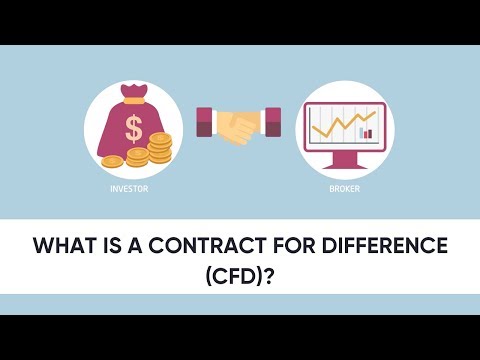
Essentially a Contract for Difference or CFD is a contract between a buyer and a seller whereby the buyer must pay the seller the difference in price between the current value of an asset and its value at the time of the contract.
This provides a means for a trader to speculate on the future price movements of an asset, without ever owning any part of the underlying asset. With CFDs, you can speculate on rises or falls in the value of an asset.
When you trade CFDs you are undertaking a contract between yourself, and the CFD broker.
Watch the video below from Capital.com for further information on what CFDs are, or alternatively read CFDs for beginners guide.
What are the disadvantages of trading CFDs?
Of course, as with any investment, there are also potential disadvantages with trading CFDs.
Higher risk than other investments. CFD trading tends to present a higher risk of losing value than other investments. In fact, CFDs are considered to be so risky that investment providers must provide a warning as to how many retail investor accounts lose money when trading with them on their platform. This figure is usually between 50-70%.
Leverage can be a double-edged sword. While leveraged trading gives you the opportunity to magnify your gains trading with a smaller upfront investment, any losses you incur will be magnified, too. So, you may lose money rapidly by trading CFDs. Make sure you fully understand leveraged trading before you invest.
Not a long-term strategy. While investing in some assets can be a long-term investment strategy, trading CFDs is generally not, as the contract has a set expiry date. As a result, they are typically not suitable for long-term investing.
Please note: The value of your investment can go down as well as up and you may not get back the full amount you invested. Past performance is not a reliable indicator of future performance.
CFD trading is potentially lucrative, but these investments are also complex instruments that present a high risk to your money. In fact, more than half of retail investor accounts lose money when trading CFDs.
Please make sure that you know these risks before you start trading and that you’re aware there’s a high chance of losing money rapidly on your investment.
Who are CFDs good for?
There is a large potential to lose money when trading CFDs as they require an advanced trading strategy that is usually utilised by experienced traders only.
When trading CFDs you are speculating on whether the price of an asset will go up, or down. As a trader, you can speculate on the upward or downward movement in price. Therefore, should a trader purchase a CFD that increases in price following that purchase, the trader will offer their holding for sale. The net difference between the price the asset was purchased at, and the price it was sold at, are netted together. This gain will then be settled through the trader’s brokerage account.
However, should the trader predict that the price of the asset will fall in value, an opening sell position can be established. The purchase of an offsetting trade is then used to close the position with the net difference of the loss settling via the CFD brokerage account.
Where can I trade CFDs?
CFDs are illegal to trade in the U.S. however they are legal in:
- United Kingdom
- Germany
- Switzerland
- Singapore
- Spain
- France
- South Africa
- Canada
- New Zealand
- Hong Kong
- Sweden
- Norway
- Italy
- Thailand
- Belgium
- Denmark
- Netherlands
What are the advantages of trading CFDs?
One of the main advantages of trading CFDs is that they can potentially allow you to make money, even when the market is on a downward spiral, although this is not a sure outcome. This was the main factor contributing to the rise in CFD popularity in 2020 when the market was in turmoil following the pandemic. In addition to this, CFD traders can take advantage of the following:
Higher leverage than traditional trading. The standard leverage in the CFD market is subject to strict regulation and now lies in the range of 3% (30:1 leverage) possibly rising to 50% (2:1 leverage). Greater potential returns are a direct result of lower margin requirements which mean less capital outlay for the trader. However, it’s important to point out that whilst this can be advantageous when trading CFDs, it can also lead to greater losses.
Access to the global market. Certainly, the list of best CFD brokers UK contained within this article all provide access to most of the worlds most significant markets, with 24/7 access for investors to trade CFDs.
Shorting at any time. With CFD instruments, traders are at liberty to go short at any time and do not need to concern themselves with the shorting rules that govern certain markets and require the trader to borrow the instrument before selling short. This in turn can avoid borrowing costs.
Hedging. CFD trades are particularly useful to hedge risk. Traders can use CFDs to lock in the value of a share portfolio at a specific point, meaning that should the value of the stock portfolio fall, the losses experienced will be offset by the profit generated by the CFD position.
Margin trading is another advantage of CFDs. Put simply, margin trading means that the trader is only putting a percentage of the total notional value of a trade.
Despite all these advantages, traders considering CFDs should remain aware that spread bets and CFDs are complex instruments and come with a high risk of losing money rapidly due to leverage.
How to identify the best CFD brokers in the UK
Thankfully for CFD traders, there is plenty of competition in the UK market between the best CFD brokers. The result of this competition is more favourable terms for the trader including better pricing structures and enhanced features. Below I have detailed what to look out for when choosing the best CFD trading platform UK.
Regulation
All the best CFD brokers I have listed in this article are authorised by the Financial Conduct Authority or a suitable alternative. Tight regulation will protect you and your money when CFD trading.
Assets
The assets provided by your chosen best CFD broker will determine the opportunities you have to make a profit when CFD trading. This can vary considerably from one CFD broker to another so it’s worth checking your CFD broker offers some or most of the following:
- Commodities
- Cryptocurrencies
- Forex
- Stocks
- Bonds
- ETFs
- Indicies
Fees
There are a number of fees to be aware of when selecting your preferred platform from which to trade CFDs. These include commission, overnight charges and the spread which is the difference between the bid price (the price you paid for the asset) and the offer price at the time of the trade.
There is usually no cost involved to trade forex pairs and commodities, however, typically CFD brokers will charge a commission for stocks, however some of the platforms listed above have waived this completely in order to remain competitive. Commissions can be charged as a percentage of the sale, or as a flat fee. If you buy a position and sell it later, this would constitute 2 separate commission payments.
Should you take a long position and hold the position overnight, there will often be an overnight charge. This will usually be charged as an interest charge for each of the days that you hold your position.
In addition to the pricing laid out above, you should also be aware of any non-trading costs including deposit or withdrawal fees and any inactivity fees.
CFD Trading Platform
The ease of use of the CFD trading platform is essential when CFD trading as this will dictate how quickly and easily you can execute your trades in response to market movement. It is also worth checking that the CFD trading platform of your choice is supported on desktop and mobile device.
The CFD trading platform of your choice should provide access to education material, research tools, and be quick and easy to navigate.
Also consider: CFD Trading Platform for Beginners
Trading tools and features
The art of CFD trading is helped greatly with innovative trading tools to assist you with your strategy. The most obvious of these is an easy to use, well laid out platform, that supports the method of use you prefer, whether it be desktop or mobile app.
A free demo account is also extremely useful so you can get to grips with the CFD broker and the tools provided before risking any of your own funds on live trading accounts.
Copy trading is also a useful function, utilised by many novice traders who prefer to mirror the trading activities of more experienced and successful traders before going it alone.
Technical indicators can help you make a success of your CFD trading, however, you will need to understand how technical indicators work. Technical indicators can help you make head or tail of pricing trends however, not all CFD brokers will offer a comprehensive suite of technical indicators so this is worth checking.
Educational resources are essential if you are new to CFD trading or are looking to advance your skills. Community forums, how-to guides, webinars and educational videos are just some of the things to be on the lookout for.
Leverage is important for UK CFD traders who have a higher tolerance for risk. The best CFD brokers will offer leverage of up to 1:30 or 1:5 should you be trading share CFDs. Due to the fact that CFD trading involves leverage, day traders can find this of significant benefit in order to trade small price fluctuations.
Negative balance protection can help protect you against severe losses and is therefore essential. This level of protection can prevent an unsuccessful trade from pushing your account into the red. This is because negative balance protection will close your position automatically the moment your CFD account hits zero.
Deposit and withdrawal options
Not all UK CFD brokers will offer every deposit and withdrawal method, and for your convenience, you should ensure that they accept a deposit method that suits you and check the withdrawal times you should expect. Most CFD brokers will accept credit/debit card and bank transfer as a minimum.
CFD Frequently asked questions
Do I pay tax on CFD profits in the UK?
At the time you close a CFD trade, you are exempt from stamp duty as you do not own any underlying assets, however, at the end of the financial year you will be liable for capital gains tax on your overall profits.
What is the difference between spread betting and CFD trading?
The main difference between spread betting and CFD trading is how they are taxed. Spread bets do not attract any capital gains tax, while profits from CFDs can be offset against any losses in the same period for tax purposes.
In addition to this, there are technical differences. Spread betting will stake a sum of money for each point of price movement in the underlying asset whereas CFD trading exchanges the difference in price from the point at which the contract is opened, to when it is closed.
What are retail investor accounts?
Retail investor accounts are used by non professional investors to buy and sell securities or funds via traditional or online brokerage firms. Retail investor accounts differ from institutional investment accounts which are populated by large-scale, professional investors.
